After months of volatility and shifting sentiment, global oil markets have found an uneasy balance. Crude prices have stabilized in the mid-$80 range as OPEC+ continues to manage supply cuts while global demand holds steady. The group’s cautious production strategy has helped offset economic uncertainty, rising U.S. output, and mixed signals from Asia’s manufacturing sector.
This fragile equilibrium reflects the evolving dynamics of a market where producer discipline, geopolitical risk, and consumer demand remain in delicate alignment.
OPEC+ Extends Supply Cuts
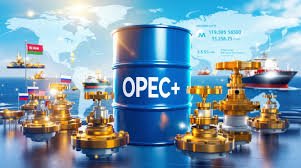
OPEC+, led by Saudi Arabia and Russia, has reaffirmed its commitment to coordinated output management through 2025.
Current cuts: Roughly 2.2 million barrels per day remain in place.
Saudi Arabia: Extending its voluntary 1 mbpd cut through Q4 to support price stability.
The strategy has prevented oversupply but also sparked debate over whether it could backfire if demand weakens further.
Key OPEC+ Production Adjustments (Q4 2025)
Country
Production (mbpd)
Change vs Q3
Notes
Saudi Arabia
9.0
-1.0
Voluntary extension of cuts
Russia
9.1
-0.4
Lower exports due to sanctions
Iraq
4.4
0.0
Complying with quota
UAE
3.2
-0.1
Minor adjustment
Total OPEC+
40.5
-1.5
Maintaining stability
Prices Find an Equilibrium
As of early November 2025:
Brent crude trades near $86 per barrel, up slightly from Q3.
WTI holds around $81.
Dubai benchmark remains steady near $83.
This stability follows a year of swings driven by economic forecasts and geopolitical tensions. Despite sluggish growth in Europe and China, steady industrial and transport fuel demand has supported prices.
Demand Outlook: Resilient but Fragile
Global oil demand remains near record levels roughly 103.2 million barrels per day though growth is slowing.
Asia-Pacific: China and India continue to drive consumption, especially in petrochemicals.
OECD nations: Demand softens slightly as fuel efficiency improves.
The IEA expects demand growth to taper to just 1.1 mbpd in 2026, marking a shift toward plateauing global consumption.
Non-OPEC Supply: U.S. Shale and Brazil
U.S. shale output remains a critical swing factor.
Permian Basin production has reached record highs near 6.1 mbpd.
However, investment discipline and rising service costs may limit future growth.
Brazil and Guyana are emerging as strong new suppliers, offsetting OPEC+ restraint with high-quality offshore production.
These developments are reshaping supply balances without undermining OPEC+’s overall price stability strategy.
Economic Backdrop
The global economy remains a major variable for oil demand.
Slowing growth: The IMF projects 2.7% global GDP expansion for 2025.
Inflation & interest rates: Persistently high borrowing costs are dampening industrial activity.
Strong dollar: A firmer U.S. currency continues to pressure import-dependent economies.
Despite these headwinds, global energy demand remains resilient, supported by transportation, aviation, and petrochemicals.
Market Risks
Risk Factor
Potential Impact
Geopolitical tensions
Middle East disruptions could spike prices
Economic slowdown
Recession risk could pull prices below $75
OPEC+ cohesion
Any breakdown in compliance may trigger volatility
Climate policies
Accelerated clean energy transition could curb long-term demand
The interplay of these forces will determine whether oil prices remain stable or face renewed turbulence heading into 2026.
Outlook: Stability Over Growth
Analysts broadly agree that OPEC+’s measured approach will likely keep Brent prices between $80–$90 per barrel through early 2026. While that range offers stability for producers, it reflects limited growth potential amid tightening macroeconomic conditions.
Longer term, energy diversification and carbon reduction policies are expected to restrain demand growth but not replace hydrocarbons outright in the near future.
The global oil market in late 2025 stands on a knife’s edge balanced between OPEC+ supply discipline and a cautiously recovering world economy. Stability has returned, but it remains fragile.
Producers appear committed to a strategy of managed equilibrium, prioritizing market confidence over expansion. For consumers, that means predictable prices; for investors, it signals a new era where oil markets may trade less on surprise and more on subtle shifts in strategy.